
Outsiders (Aliens) – Non-Human Threats in the YE 500 Cradle
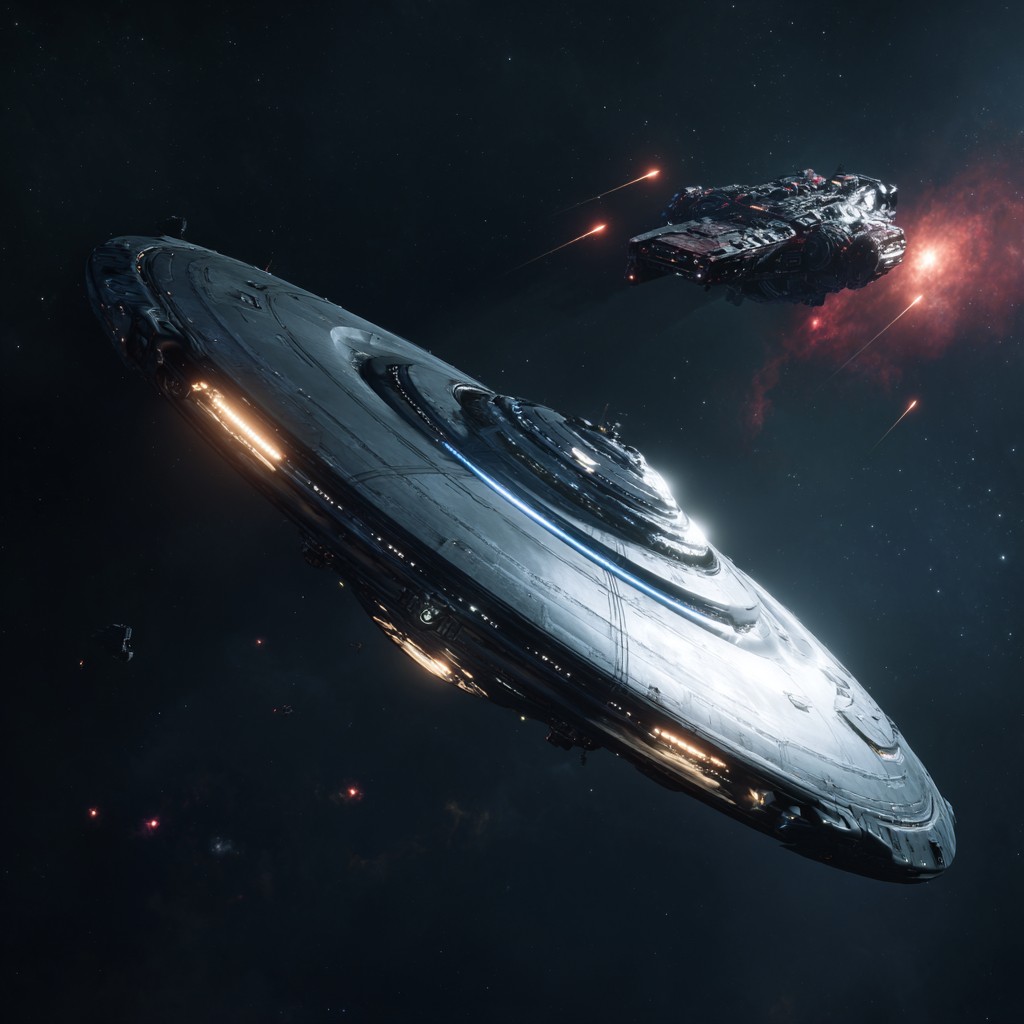
In the Year of Exodus 500 (~2764 AD), the term “Outsiders” refers to the rare, highly advanced, and deeply enigmatic intelligent alien species that humanity has encountered within the Cradle — that fragile 10,000–12,000 light-year diameter bubble of space expanded out from the position of Sol, and where all known human settlements now exist.
Outsiders do not originate from within the Cradle. Every confirmed sighting, abduction, or wreckage trace points to their arrival from the vast, uncharted darkness of the Void beyond the Cradle’s edge. They enter seemingly sporadically using gravity-jump drive technology that instantaneously relocates their vessels across distances ranging from 1 to over 10,000 light-years — a capability that utterly outclasses human Fluxion Drives in both range and precision.
Human Fluxion (Hyperdrive Core) systems require days or weeks to cross even modest interstellar gaps and rely on scarce helium-3 fuel. The Outsider gravity-jump drives appears to require no visible fuel or radiate any propulsion signature. Additionally, Outsider ships perform sublight maneuvering at speeds up to 10 km/s through localized spacetime warping.
Encounters with Outsiders remain infrequent but profoundly disturbing. Roughly 1–5% of deep-fringe jumps report contact, dropping to only 0.1% within the more heavily trafficked core regions of the Cradle. When Outsiders do appear, their behavior is almost always hostile or coldly indifferent, never communicative. No Outsider vessel has ever responded to hails, negotiated, traded, or sought alliance. Their observed actions center almost exclusively on resource harvesting — most commonly biological material, whether livestock from frontier colonies, crew members from isolated ships, or entire populations of remote outposts.
Humanity’s knowledge of Outsiders is fragmentary and drawn from four main sources: survivor testimonies (frequently fragmented by induced amnesia or trauma), automated probe logs, salvaged debris (rare and unstable), and classified military/intelligence reports from the Luyten Empire, Teegarden Directorate, and a handful of independent stations. No permanent Outsider bases, colonies, embassies, or diplomatic contacts have ever been located or confirmed within the Cradle.
Four distinct spacefaring species have been reported based on multiple independent, corroborated incidents.
1. Greys (also called Zeta Reticulans by fringe scholars)
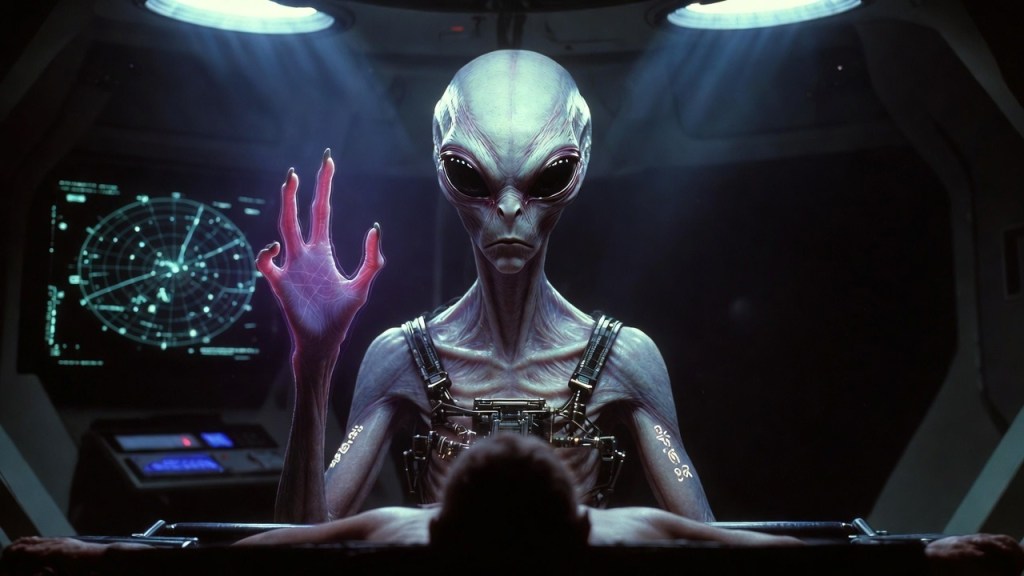
Greys are the most frequently reported Outsider species, though still exceptionally rare in absolute terms. They stand 6 to 8 feet tall, with smooth, uniformly gray skin, disproportionately large heads, enormous black almond-shaped eyes that lack visible pupils or sclera, with tiny nostrils and mouth slits, and slender, elongated limbs that end in four-fingered hands.
Witnesses consistently describe an eerie silence to their presence — no breathing sounds, no footsteps, no mechanical clicks. They almost always operate in small groups of three to five individuals.
Their vessels are smooth, seamless discs or rounded triangles measuring 10–50 meters in diameter, with no visible engines, windows, or seams. These craft can hover silently, accelerate instantaneously, phase directly through solid matter (including ship hulls, planetary crust, or station bulkheads), and emit powerful electromagnetic pulses that induce widespread blackouts, sensor failure, and “missing time” episodes in human witnesses.
GM Notes:
Greys possess extraordinarily advanced telepathic abilities: they can read surface thoughts (resolved as opposed Personality Action Rolls), induce full paralysis or temporary amnesia in targets, and project overwhelming mental pressure that forces compliance or disorientation. Their behavior is clinical, methodical, and utterly detached. They conduct abductions solely for biological sampling, surgical examinations, implant insertion, tissue extraction, or reproductive experiments. They target isolated ships, remote outposts, lone prospectors, or small frontier colonies. They ignore hails, show no direct aggression unless attacked, and depart immediately once their objectives are complete.
Greys are most commonly encountered along the fringes of Quadrants II and III, often near gas-giant atmospheres or derelict hulks where they appear to harvest trace biological or mineral resources. Threat level is rated high: even brief encounters can result in total system shutdowns, crew disorientation lasting hours to days, permanent memory gaps, and missing persons.
Salvage attempts on Grey wreckage carry extreme risk of residual psionic backlash or latent implant activation. In NOVACore terms, detection requires Astrogation or Science rolls at Difficult (TN 18); evasion during pursuit occurs at approximately 10 km/s and demands Formidable (TN 24+) Piloting rolls. Psionic attacks are resolved as opposed Personality rolls, with failure often resulting in paralysis (lose next 1d6 rounds) or amnesia (–2 to all INT-based rolls for 1d6 hours).
2. LGMs (Little Green Men / Lattice Gremlins / Low-G Menaces)
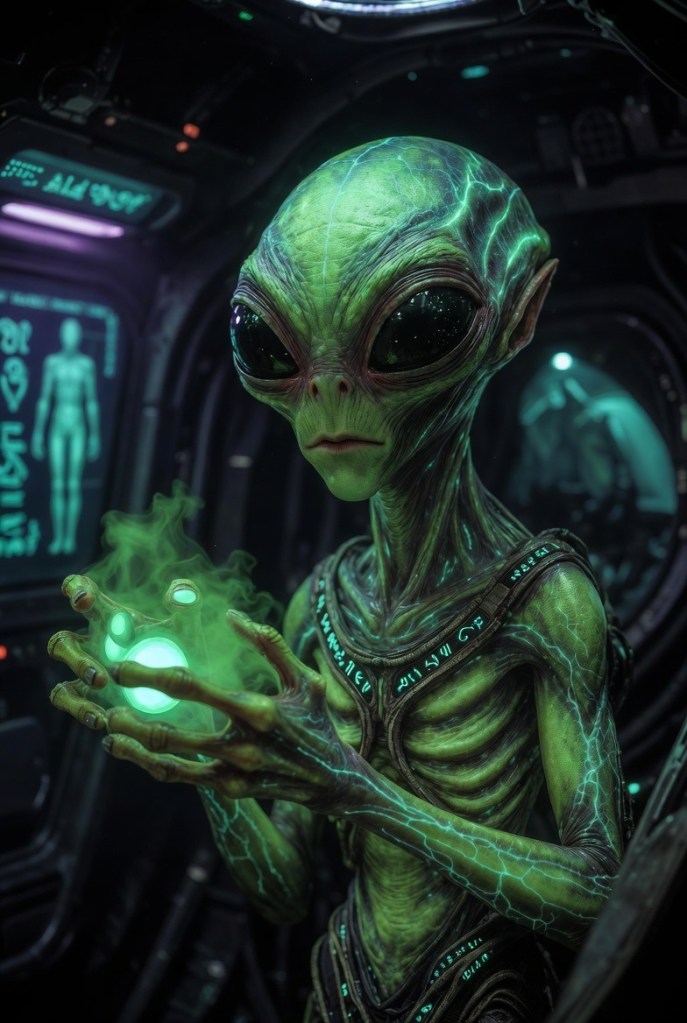
LGMs are diminutive humanoids standing only 3–4 feet tall, with bright green skin, large bulbous compound eyes, and wiry, agile builds clearly adapted to low-gravity or zero-gravity environments. They move in quick, skittering bursts and exhibit no fear of heights or open voids. Their vessels are compact saucer- or dart-shaped craft measuring 5–20 meters, with iridescent hulls that shimmer and refract light during maneuvers. These ships are extraordinarily agile, capable of hyper-precise maneuvering, rapid course changes, and scavenging operations without triggering most standard sensor alarms.
GM Notes:
LGMs possess swarm-based telekinesis that allows coordinated groups to manipulate objects at a distance or disassemble complex machinery with terrifying efficiency. They operate almost exclusively in swarms of 10–20 individuals, rarely acting alone. Their behavior is focused entirely on sabotage and scavenging: they infiltrate human ships, stations, or Verti-Parks to steal electronic components, fuel cells, data cores, or rare materials, then retreat before defenders can fully respond. They avoid direct combat unless cornered, preferring hit-and-run tactics or overwhelming numbers to disable rather than destroy. They are most frequently encountered in derelict hulks, abandoned mining stations, salvage yards, and the lower decks of Verti-Parks across all four quadrants, where they exploit human technological vulnerabilities.
Threat level is medium: individual LGMs pose little danger, but swarms can disable engines, erase navigation data, or cripple life support before crews realize they are under attack. In NOVACore, countering their sabotage requires Electronics or Engineer rolls at Average (TN 12+); swarm attacks are resolved as multiple simultaneous opposed Agility rolls, with each successful LGM action inflicting system degradation (–1 to –3 cumulative penalties to ship or station functions).
3. Reptilians – Kobold and Ophidian Variants
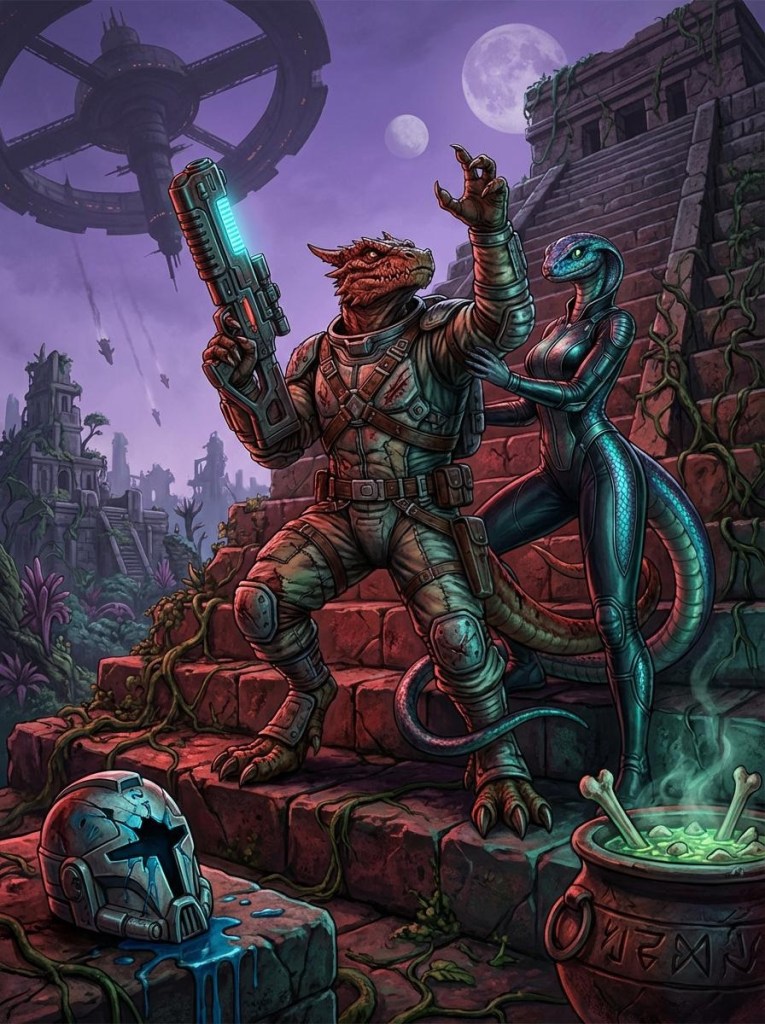
Reptilians are divided into two distinct castes or subspecies with markedly different appearances and behaviors, though both share reptilian traits: scaled skin, clawed hands and feet, slit-pupiled eyes, and cold-blooded physiology.
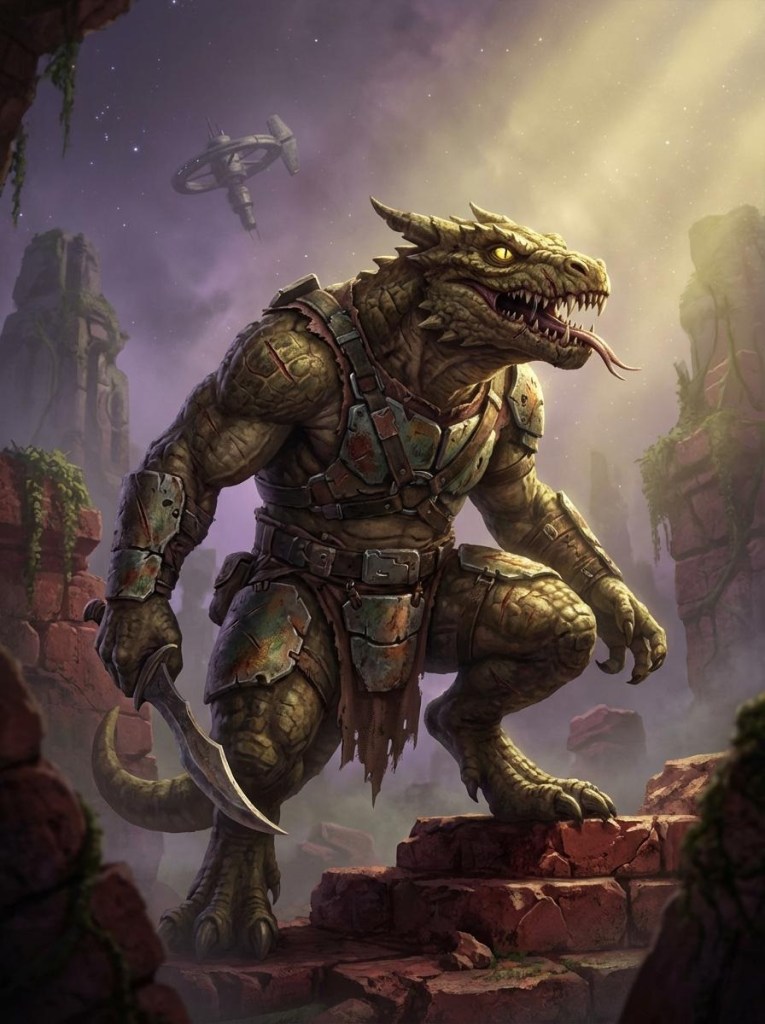
Kobolds are stockier and more brutish, standing 4–6 feet tall, with thick muscular builds, heavy bony ridges, and a draconic, almost saurian appearance. They favor angular, spiked wedge-shaped vessels measuring 20–40 meters, designed for high-speed ramming, breaching, and boarding actions. Kobolds exhibit pack-level empathy that allows seamless coordination during raids, functioning almost as a single organism when hunting in groups. Their primary activity is overt aggression: they target mining colonies, fringe outposts, and merchant convoys to capture slaves, seize raw materials, and plunder technology. They are most commonly encountered in Quadrant IV, particularly around mining worlds and asteroid belts.
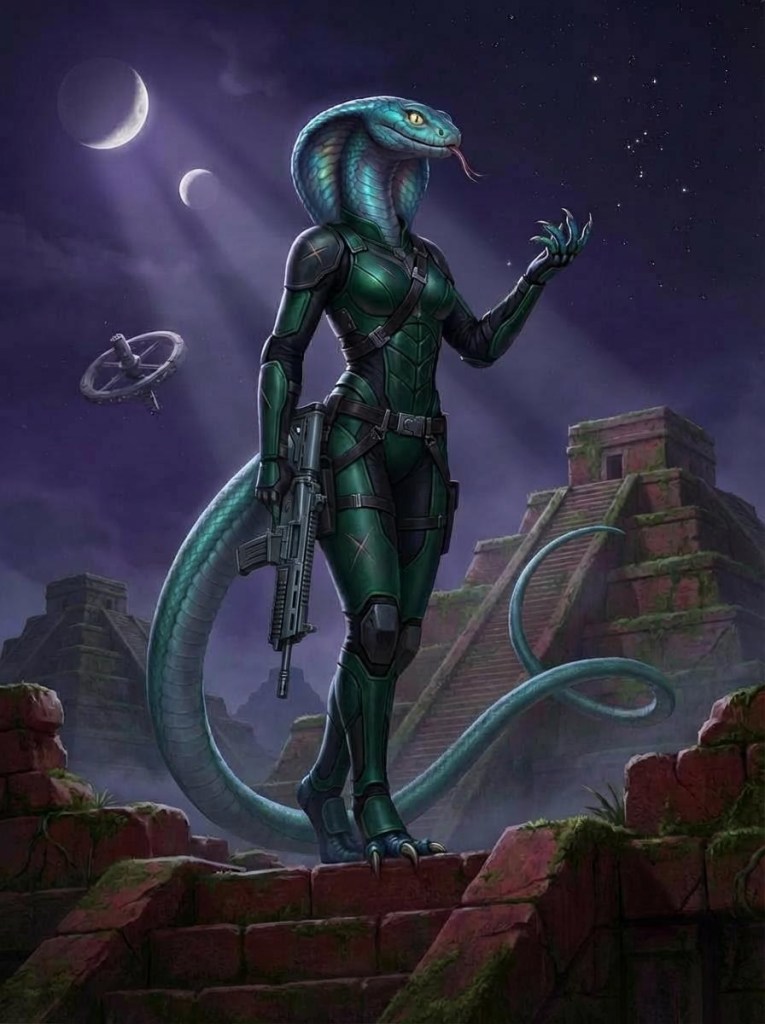
Ophidians are taller and more serpentine, standing 6–8 feet tall, with elongated bodies, iridescent scales that shift color for camouflage, and flawless shapeshifting capabilities that allow them to conceal their true size and perfectly mimic human appearance down to voice, mannerisms, and even scent.
They use sleek, flattened ovoid “egg”-shaped vessels measuring 15–30 meters equipped with advanced stealth grav-cloaks that render them nearly undetectable until the moment of attack. Ophidians specialize in infiltration, long-term subversion, intelligence gathering, and surgical sabotage. They insert agents into human societies, corporations, or military units, remaining undetected for months or years before activating sleeper protocols. They have been sighted across all quadrants, often operating undercover within settlements, trade guilds, or even high-level positions.
Both Reptilian variants are aggressive resource-grabbers: Kobolds favor direct raids for slaves and materials, while Ophidians prefer subtle internal access. Threat level is extreme — Kobolds present immediate, lethal boarding threats; Ophidians represent long-term existential danger through infiltration.
GM Notes:
In NOVACore, Kobold boarding actions are resolved as opposed Strength rolls; Ophidian detection requires Perception rolls at Very Difficult (TN 21+), with failure meaning the infiltrator remains undetected until activation.
4. Mantids (Insectoids / Psionic Overseers)
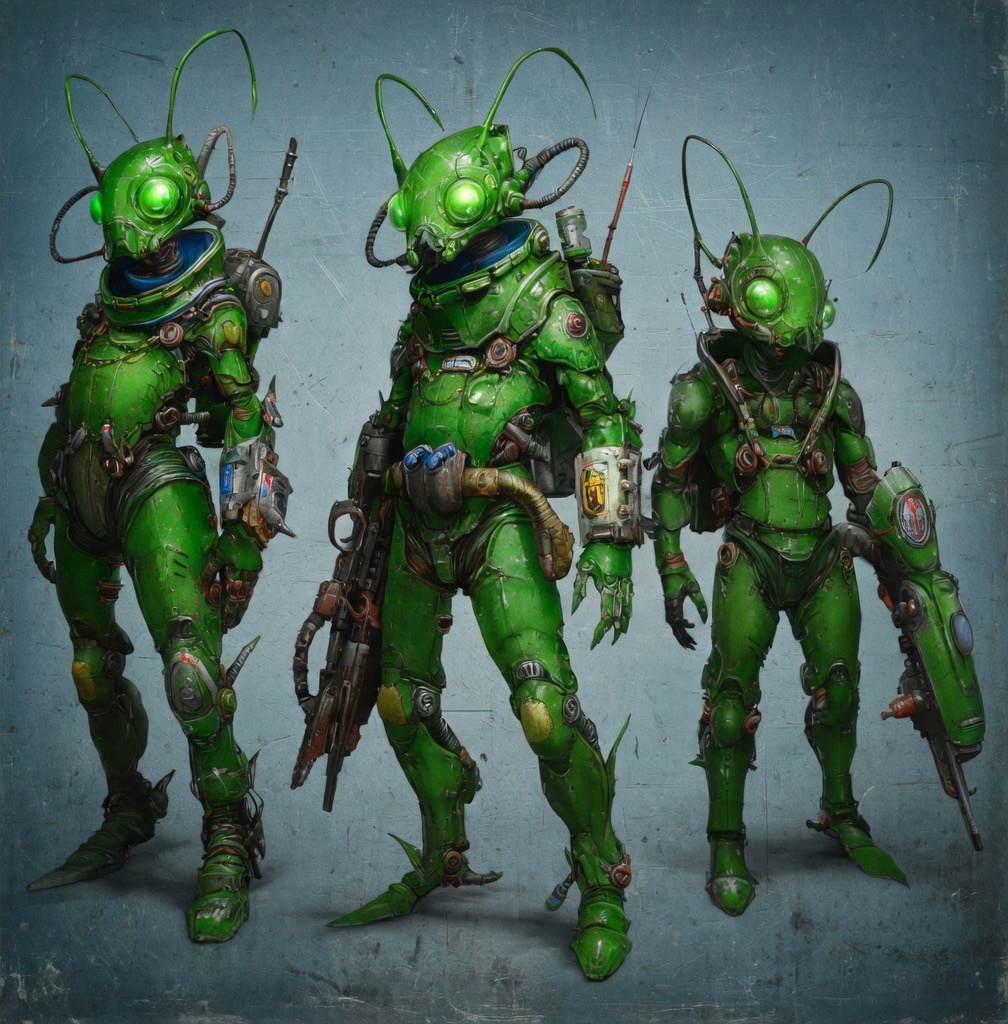
Mantids serve as the collective designation in the Cradle for the broad and varied family of intelligent insectoid Outsider species that humanity has encountered since the earliest days of interstellar expansion. The name originated from the first encounters with the most visually striking variants: tall, mantis-like beings standing 7 to 9 feet in height, with elongated forelimbs, segmented chitinous exoskeletons, large compound eyes, and razor-sharp mandibles. Over time, however, reports and recovered evidence made it clear that the same underlying intelligence operates across a far wider spectrum of forms. The term now encompasses every known intelligent insectoid entity from the Void, regardless of size or structure.
Their vessels are hexagonal prism-shaped craft measuring 30–60 meters, with smooth, faceted surfaces and no visible external features. These ships perform precise “teleport-like” maneuvers via grav-warps, often deploying small probe drones for remote observation and sample collection before the main vessel arrives.
GM Notes:
Mantids are undisputed masters of psionics, exhibiting telepathy, mind control, levitation, and localized energy manipulation far beyond any documented human ability. Their behavior is that of overseers or experimenters: they paralyze crews, harvest biological material (organs, neural tissue, genetic samples), and appear to direct or influence other Outsider species as part of a larger, unseen hierarchy. They are most commonly encountered in Quadrants I and III, often at remote experimental sites, derelict wrecks, or locations where they seem to be conducting long-term studies on captured subjects.
Threat level is catastrophic: even brief encounters frequently result in total crew paralysis, selective harvesting of individuals, or profound psychological trauma that leaves survivors unable to function. Salvage of Mantid wreckage carries extreme risk of residual psionic backlash or latent implant activation. In NOVACore, psionic domination is resolved as opposed Personality rolls at Heroic (TN 24+); failure usually results in complete loss of agency for 1d6 rounds or longer-term mental effects (–5 to all rolls for 1d6 hours).
 Eye Of Balor Magazine