Glossary of Peoples, Places, and Things
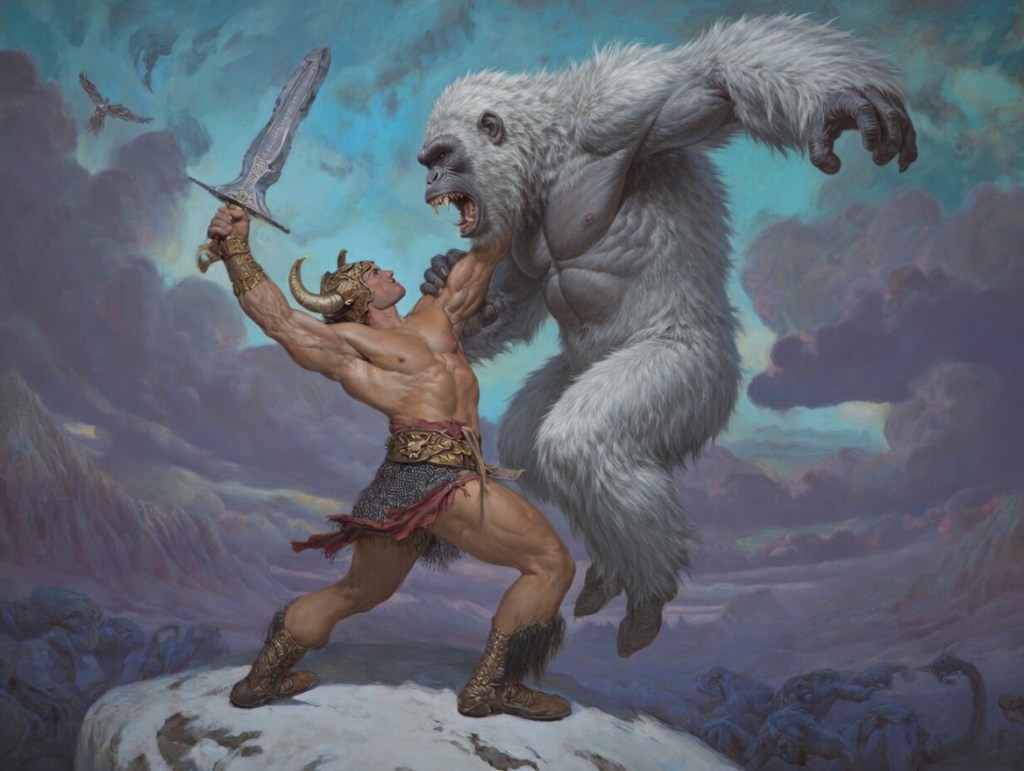
Table of Contents
Peoples & Races
- Aesir (Æsir)
- Cimmerians
- Himelian Tribes (e.g., Afghulis, Wazuli)
- Hyborians
- Hyrkanians
- Picts
- Shemites
- Stygians
Kingdoms & Nations
- Aquilonia
- Argos
- Cimmeria
- Khitai
- Koth
- Nemedia
- Ophir
- Stygia
- Turan
- Vendhya
- Zingara
- Zamora
Cities & Locations
- Arenjun
- Belverus
- Khemi
- Khoraja
- Pictish Wilderness
- Shadizar
- Tarantia
- The Black Coast
- Xuthal
Major Characters (Besides Conan)
- Belit
- Balthus
- Nabonidus
- Olgerd Vladislav
- Prospero
- Taramis
- Thoth-Amon
- Tsotha-lanti
- Valeria
- Xaltotun
- Yara
Gods & Supernatural Entities
- Adonis
- Asura
- Bel
- Crom
- Dagon
- Derketo
- Erlik
- Gullah
- Hanuman
- Ishtar
- Jhebbal Sag
- Mitra
- Omm / Zath
- Pteor
- Set
- Tarim
- Ymir
- Yog
Religions and Cults
- Asura Cult
- Cimmerian Worship (Crom and kin)
- Cult of Hanuman
- Cult of Mitra
- Darfari Cannibal Cult (Yog)
- Hyrkanian/Turanian Religion (Erlik, Tarim)
- Pictish Beast Worship (Jhebbal Sag, Gullah)
- Serpent Worship / Cult of Set
- Shemite Polytheism (Ishtar, Bel, Pteor, Adonis)
- Spider Cults of Zamora (Omm, Zath)
- Stygian Goddess Cult (Derketo)
- Nordheim Worship (Ymir)
Artifacts & Magical Items
- Black Lotus
- Book of Skelos
- Heart of Ahriman
- Phoenix on the Sword
- Serpent Ring of Set
- Star of Khorala
- Teeth of Gwahlur (Jewels of Gwahlur)
- Yellow Lotus
Magic in the Hyborian World
- Sources of Magical Power
- Types and Manifestations of Magic
- Practitioners and Their Fates
- Howard’s Core Philosophy on Magic
Bestiary of Monsters and Creatures
- Black Ones (Cannibals of Darfar / Zamboula)
- Demon / Thing from the Outer Dark
- Frost-Giant’s Daughter / Atali
- Giant Grey Ape
- Grey Ape (of Yara)
- Giant Serpents / Children of Set
- Golden Serpents (of Xuchotl)
- The Slithering Shadow (Thog)
- The Thing from the Abyss / Outer Horror
- The Winged Horror
- Yag-Kosha / Yogah of Yag
Peoples & Races
Aesir (Æsir)
Tall, blond northern barbarians from the far northern land of Asgard. They are mighty warriors, kin to the red-haired Vanir of Vanaheim, and among the fiercest fighters of the Hyborian Age. Like their Vanir cousins, the Aesir often descend from their snowy homeland as mercenaries, raiding southward into the Hyborian kingdoms or hiring themselves out as heavy infantry and shock troops in the endless wars of the south. Golden-haired and blue-eyed, they fight with the savage joy of their Viking-like ancestors, wielding sword, axe, and shield with tremendous strength and endurance. Their war-songs echo across frozen fields and southern battlefields alike, and their blood runs hot with the ancient fury of the northern ice-fields.
Quote: “The blond Æsir… tall and mighty… came down from the north” (“The Hyborian Age”).
Cimmerians
A northern barbarian people dwelling in a somber land of gloom and mist. They are dark-haired, gray-eyed hillmen who are fierce, moody, and warlike. They live in scattered clans among high, windswept hills and dark forests, where they value strength and endurance above all things. Life in Cimmeria is harsh and unforgiving, and its people scorn the softness and decadence of civilized lands. Conan himself is a true son of this somber realm: black-haired, sullen-eyed, and born with a sword in his hand in those gloomy hills where only the strong survive.
Quote: “Know, O prince, that between the years when the oceans drank Atlantis and the gleaming cities, and the years of the rise of the sons of Aryas, there was an Age undreamed of… Hither came Conan, the Cimmerian, black-haired, sullen-eyed, sword in hand…” (“The Phoenix on the Sword”).
Quote: “I remember the dark woods and the gray hills… the brooding north where the gray mists drift… Cimmeria, land of darkness and deep night” (“Cimmeria,” poem).
Quote: “The Cimmerians… dwelt in dark hills and gloomy forests… a somber and moody people, little given to laughter or song” (“The Hyborian Age”).
Himelian tribes (e.g., Afghulis, Wazuli)
Afghulis (also known as the hillmen of Ghulistan): Wild hillmen of the eastern mountains who dwell in the savage, wind-swept peaks and rocky gorges of the Himelian range. They are fierce, independent clans who acknowledge no king and bow to no law but their own. Lean, hawk-faced, and wolf-eyed, these mountain warriors live by raid and blood-feud, descending like avalanches upon the fat lowlands to plunder caravans, sack villages, and carry off women and cattle. They fight with tulwar, jezail, and long knife, moving with the silent speed of mountain goats through passes that only they know. Proud and untamable, the Afghulis scorn the soft cities of men and live by a harsh code of honor, vendetta, and freedom. Even the kings of Turan and the sorcerers of Khitai fear to send armies into their high, barren strongholds.
Quote: “The Afghulis… wild hillmen… acknowledged no king” (“The People of the Black Circle”).
Hyborians
A tall, tawny-haired, gray-eyed race that swept down from the northern lands like a conquering tide. They are the dominant civilized people of the Hyborian Age who overran the western world and built mighty kingdoms after conquering or absorbing older races. Warlike and adventurous, they are nevertheless capable of great art, chivalry, and statecraft. Their blood and culture form the backbone of the proudest nations of the age, chief among them Aquilonia, the mightiest realm of the west.
Quote: “The Hyborians… were a tall, tawny-haired race… they overran the western world like a conquering tide” (“The Hyborian Age”).
Hyrkanians
Eastern nomads who ride out of the vast steppes beyond the Vilayet Sea. They are masters of horse and bow, fierce horsemen with dark hair and slanted eyes. Tall and lean for the most part, though some among them are squat and broad-shouldered, the Hyrkanians sweep across the land like a whirlwind of steel and arrowheads. They live in the saddle, fight from horseback with deadly accuracy, and carve out empires with their relentless cavalry charges. From the shores of the Vilayet they founded the mighty kingdom of Turan, a golden empire of horse-archers and glittering cities that became the terror of the western world. Proud, ruthless, and born to war, the Hyrkanians represent the untamed fury of the eastern steppes.
Quote: “The Hyrkanians… rode out of the east… masters of horse and bow” (“The Hyborian Age”).
Picts
A short, dark, apelike race of savage forest-dwellers who haunt the western wilderness. They are heavily tattooed and ferocious in battle, fighting with poisoned arrows and swarming their enemies in howling hordes. Primitive, relentless, and utterly merciless, they are the eternal foes of frontier civilization, striking from the deep woods like wolves and showing no mercy to those who dare encroach upon their ancient hunting grounds.
Quote: “The Picts were a short, dark, apelike race… tattooed, ferocious… they swarmed like rats” (“Beyond the Black River”).
Shemites
Dark-skinned people from the southern meadows and steppes of Shem. They are hook-nosed and curly-bearded, a race of proud shepherds and fierce warriors equally skilled with bow, spear, and scimitar. Whether roaming as nomads with their vast herds or serving as mercenaries in foreign armies, the Shemites are renowned for their hardiness, cunning, and martial prowess. They long groaned under foreign yokes before rising to conquer the kingdom of Koth itself, only to be later overrun by the invading Hyrkanian hordes. Their blood runs hot with the fierce pride of the desert and the open grasslands, and their war-cries echo across the meadowlands south of the Hyborian kingdoms.
Quote: “The Shemites… dark and hook-nosed… masters of the bow” (“The Hyborian Age”).
Stygians
A southern people of ancient lineage whose kingdom lies along the great serpent-river Styx. The aristocratic pure-bloods are tall and dusky-skinned, with proud, aquiline features and eyes that gleam with the cold light of old sorcery. They rule a grim theocracy devoted to dark and terrible rites, where priest-kings and sorcerer-priests hold absolute power in the name of the serpent god Set. Beneath the surface of their black pyramids and shadowed temples, Stygia practices forbidden necromancy, human sacrifice, and ancient evils that even the Hyborian nations fear. The common people toil in the shadow of these cruel masters, while the ruling caste guards its bloodline with jealous purity. Stygia stands as the last surviving remnant of an older, darker age, a land where civilization and blackest sorcery walk hand in hand.
Quote: “Stygia… a theocracy of sorcerer-kings… the pure-bloods are tall, dusky-skinned” (“The Hyborian Age”).
Kingdoms & Nations
Aquilonia
The proudest and mightiest kingdom of the Hyborian nations in the western world. It is a land of fertile plains, rolling meadows, and broad rivers. Aquilonia boasts towering cities of marble and granite, feudal barons who rule from grim castles, and knightly orders whose lances gleam like a forest of steel. It is rich beyond measure, powerful in arms, and unmatched in splendor. Its glittering capital, Tarantia, rises like a jeweled crown on the banks of the Khorotas River, with its palaces, temples, and towering spires visible for leagues across the countryside. Here the kings of Aquilonia hold court in opulent halls, while the realm’s warlike nobles and heavily armored knights ride forth to expand the borders or crush rebellious provinces. Aquilonia stands as the very heart and pinnacle of Hyborian civilization, proud, ambitious, and destined to become the greatest empire of the age until the day the barbarian tide finally breaks upon its walls.
Quote: “Aquilonia, proudest kingdom of the western world” (“The Phoenix on the Sword”).
Quote: “Aquilonia… the proudest kingdom of the Hyborian nations… a land of fertile plains and towering cities” (“The Hour of the Dragon”).
Argos
A wealthy trading nation of merchants and gold, and a powerful maritime kingdom along the western coast. White-sailed galleons crowd its harbors and the wealth of many lands flows through its bustling ports. The Argosseans are shrewd merchants and bold seafarers who grow rich from trade, filling their coffers with gold, spices, silks, and precious gems from distant shores. Their cities gleam with prosperity, their warehouses overflow with goods, and their nobles live in luxury earned by the sea. Yet beneath the surface of wealth and commerce, Argos remains a hard, practical land where a man’s word is measured by his profit and his sword arm stays ready. Argos stands as one of the richest and most influential of the Hyborian kingdoms, its power built not upon conquest alone, but upon the golden tide of trade that never ceases to flow into its harbors.
Quote: “Argos… ships and trade” (“The Pool of the Black One”).
Cimmeria
A land of high hills, dark forests, and cold, iron skies where savage wars rage without end. It is a gloomy and misty realm, brooding under perpetual gray clouds, where chill north winds howl down from the arctic wastes and thick fogs drift endlessly through the valleys like the ghosts of forgotten battles. The sun rarely breaks through the heavy overcast, and when it does, it shines pale and cold upon a harsh, unforgiving landscape of rugged crags, black pines, and rushing torrents. Life here is hard and merciless. The people live in scattered clans, valuing only strength, endurance, and courage. There is little joy and much feuding, for in Cimmeria a man must fight for everything, even the right to survive. This somber, mist-shrouded land breeds a race of fierce, moody warriors who scorn the softness of civilization and trust only in their own steel and will.
Quote: “Cimmeria… a land of high hills and dark forests… a land of cold skies and savage wars” (“The Hyborian Age”).
Quote: “I remember… the brooding north where the gray mists drift… Cimmeria, land of darkness and deep night” (“Cimmeria,” poem).
Khitai
A mysterious far eastern ancient empire. It is a land of exotic splendour and veiled secrets that lies at the very edge of the known world, beyond the Himelian Mountains and the eastern deserts. Khitai is an ancient realm of people whose civilization is older than most Hyborian kingdoms. Its great cities are filled with lacquered towers, jade pagodas, and gardens of unearthly beauty, while its emperors rule from thrones of ivory and gold. The people of Khitai are skilled in strange arts and forbidden sorceries. Few Hyborians have ever reached this distant empire, and those who return speak in hushed tones of silken-robed nobles, mysterious priests, and dragons that may be more than legend. Khitai remains a place of wonder and danger, a veiled eastern empire whose true power and ancient knowledge are only dimly guessed at by the nations of the west.
Quote: “Khitai… mysterious and ancient” (“The Hyborian Age”).
Koth
A southern Hyborian land, decadent and gold-rich, lying along the borders of Shem. It is a kingdom of broad plains, wealthy cities, and fertile fields that gleam with golden grain, yet it has grown soft and corrupt beneath the influence of southern blood and southern ways. Its people mix Hyborian vigor with Shemite cunning, producing merchants who pile up vast riches and nobles who indulge in every luxury and vice. Koth glitters with gold, but its courts are filled with intrigue, its temples echo with strange foreign rites, and its kings often wear the heavy yoke of Shemite customs. Once strong and warlike, Koth has become a land where pleasure and gold matter more than honor, a decadent southern realm whose armies still march but whose heart has begun to rot. It stands as a gilded bridge between the proud Hyborian north and the mysterious, shadowed south.
Quote: “Koth… decadent and gold-rich” (“Black Colossus”).
Nemedia
A golden kingdom rich in gold and intrigue, the cultured and powerful rival of Aquilonia. It is a land of fertile plains, ancient cities, and proud feudal lords who dwell in towering castles of gray stone. Nemedia boasts heavily armored knights renowned for their chivalry and martial skill, as well as scholars and sorcerers who guard ancient lore from forgotten ages. Its capital, Belverus, gleams with wealth and splendor, its streets filled with merchants, poets, and scheming nobles. While Aquilonia claims greater military might, Nemedia matches it in culture, learning, and political cunning. For centuries the two great Hyborian powers have clashed in border wars and diplomatic games, each seeking dominance over the western world. Nemedia stands as a worthy rival, wealthy, sophisticated, and ever ready to strike when its neighbor shows weakness.
Quote: “Nemedia… the golden kingdom… rich in gold and intrigue” (“Rogues in the House”).
Ophir
Ophir is a wealthy and powerful kingdom in the southern Hyborian lands, renowned for its abundant gold, fertile valleys, and prosperous cities. Its people are shrewd merchants and skilled traders, amassing great fortunes through commerce with neighboring realms. Gold defines Ophir: from its mines and ornaments to the overflowing coffers of its nobles. Merchant princes rival kings in influence, and luxury permeates every aspect of life. Yet beneath the opulence, Ophir is proud and ambitious, always seeking to expand its borders or forge profitable alliances.
It stands as a glittering jewel of the Hyborian world, where power is measured by the weight of gold.
Quote: “Ophir… merchants and gold” (“The Scarlet Citadel”).
Stygia
A land of dark sorcery and serpent cults, an ancient theocracy shrouded in shadow and forbidden knowledge. It is a grim, mysterious realm of black pyramids, colossal temples, and silent cities that brood along the banks of the great serpent-river Styx. Here the priest-kings and sorcerer-priests of Set rule with absolute and merciless power, performing blood-drenched rites in the name of their scaled god. Shadowy ports along the western coast receive strange galleys from distant lands, while the interior is a realm of haunted ruins, forbidden tombs, and temples where living serpents coil around black altars. The common folk toil in fear beneath the gaze of their aristocratic pure-blood masters, whose dusky skin and cold, aquiline features mark them as a race apart. Stygia is a place where civilization and blackest sorcery have become one, a surviving fragment of an older, darker world that the Hyborian kingdoms both envy and dread. Even the bravest knights of Aquilonia speak its name in hushed tones, for in Stygia the line between man and monster is thin, and the shadow of Set stretches long across the land.
Quote: “Stygia… land of dark sorcery and serpent cults” (“The Hour of the Dragon”).
Turan
The golden empire of the east, conquest-driven and built upon the backs of its peerless horse-archers. It is a vast and glittering realm that sprawls along the southwestern shores of the inland Vilayet Sea, where golden-domed cities rise like jewels from the steppes and deserts. The Turanians are a proud Hyrkanian people who live in the saddle and fight with bow and saber from horseback. Their armies sweep across the land like a storm of steel-tipped arrows, conquering everything in their path with relentless speed and deadly accuracy. Turan is rich in plunder, trade, and slaves, its capital great and opulent. Its khans and warlords rule with iron discipline, and its horsemen are feared from the Himelian Mountains to the borders of Zamora and Brythunia. Turan represents the fierce, untamed power of the eastern steppes, a golden empire forged by conquest, sustained by the bow, and driven by the endless hunger of the Hyrkanian horsemen.
Quote: “Turan… the golden empire of the east” (“The People of the Black Circle”).
Vendhya
A southern land of mystery and dark gods. It is exotic and ancient. Vendhya lies far to the south and east beyond the Himelian Mountains. It is a realm of teeming jungles, marble palaces, and golden temples where rajahs rule from thrones of ivory and silk. Its people are dark of skin and graceful of movement, with eyes that hold secrets older than the Hyborian Age. The rajahs and noble houses govern with absolute power, surrounded by eunuchs, dancing girls, and veiled priestesses who serve strange and terrible gods in hidden temples. Vendhya is a place of opulent beauty and hidden horror, where sacred elephants walk gilded streets and dark rites are performed beneath the moon. To the men of the west it remains a distant dream of exotic splendour and lurking danger, a southern land where mystery and dark gods walk hand in hand.
Quote: “Vendhya… land of mystery and dark gods” (“The People of the Black Circle”).
Zingara
A southern land of poets and pirates. It is a coastal kingdom washed by the western ocean, where white-walled cities rise beside blue harbors and crimson-sailed galleons glide into port. Here chivalric knights in gilded armor ride forth from grim castles to uphold honor and seek glory in tourney and war. Yet Zingara is equally famous for its lawless buccaneers and swaggering corsairs who prowl the seas, singing wild songs of plunder and adventure. Its people are a hot-blooded mixture of Pictish, Hyborian, and Zamorian blood, producing both graceful troubadours who compose verses of love and betrayal and fierce sea-rovers who live by the cutlass. Zingara is a realm of sharp contrasts where a man may be both poet and pirate, and where the clash of steel is never far from the strum of a lute.
Quote: “Zingara… land of poets and pirates” (“The Pool of the Black One”).
Zamora
Land of thieves and wickedness. Its cities are dens of vice and shadowed intrigue where cutpurses, assassins, and sorcerers thrive in the narrow streets. Zamora is a mysterious eastern kingdom whose people are known for their strange, dark beauty and their skill in deception and stealth. Its greatest city, Shadizar, is called Shadizar the Wicked, a place where every vice can be bought for a price and every shadow hides a dagger or a spell. Zamora stands apart from the Hyborian nations, a land of ancient decadence and forbidden knowledge that draws adventurers and rogues like moths to a flame.
Quote: “Zamora… land of thieves and wickedness” (“The Tower of the Elephant”).
Cities & Locations
Arenjun
A city in Zamora with the notorious slum known as the Maul. It is a rough, dangerous place where thieves, cutthroats, and desperate men gather in its twisting alleys and smoky taverns. Narrow streets wind like serpent trails between crumbling buildings, and the air is thick with the stench of wine, sweat, and blood. Here the dregs of Zamora come together — pickpockets, murderers, and wandering rogues — all seeking fortune or a quick knife in the dark. The Maul is a lawless quarter where a man’s life is worth less than a copper coin and where the strong prey upon the weak without mercy.
Quote: “Arenjun… city of the Maul” (“The Tower of the Elephant”).
Belverus
The capital of Nemedia, a city of plots and intrigue. Its marble halls and shadowed palaces are filled with scheming nobles, wealthy merchants, and cunning spies who weave endless webs of politics and betrayal. Grand avenues lined with statues lead to opulent villas and temples, yet behind the gilded façades, every smile hides a dagger and every whispered conversation may seal a kingdom’s fate. Belverus is a place where ambition and treachery walk hand in hand, and where the game of power is played with the lives of men.
Quote: “Belverus… city of plots” (“Rogues in the House”).
Khemi
The veiled Stygian port city shrouded in mystery. It is a place of black temples, silent streets, and shadowy harbors where strange galleys from unknown lands dock under the watchful eyes of serpent priests. Massive black pyramids loom over the city, and the air carries the heavy scent of incense and myrrh mixed with the salt of the sea. Few outsiders walk its streets without feeling the cold gaze of Set’s servants. Khemi is a city where ancient evil slumbers beneath the surface and where the line between man and monster grows thin.
Quote: “Khemi… veiled in mystery” (“The Hour of the Dragon”)
Khoraja
A besieged border city-kingdom caught between the ambitions of greater powers. It stands as a lonely outpost where desperate battles are fought against invading forces. Its walls have known the crash of siege engines and the cries of dying men, yet its people cling stubbornly to their independence. Khoraja is a place of valor and tragedy, where the fate of kingdoms is decided on blood-soaked fields and where courage is measured by how long a man can hold a spear against overwhelming odds.
Quote: “Khoraja… besieged city” (“Black Colossus”)
Pictish Wilderness
The dark and trackless western forests that form the frontier terror. These ancient woods are a savage realm of dense trees, hidden trails, and relentless Pictish war parties who strike without warning from the shadows. Massive oaks and tangled vines create a green labyrinth where sunlight rarely reaches the forest floor. The Picts move through this wilderness like ghosts, their painted bodies blending with the gloom as they hunt with poisoned arrows and stone axes. To civilized men it is a place of nightmare, where death can come silently from any direction.
Quote: “The Pictish Wilderness… dark and trackless” (“Beyond the Black River”)
Shadizar
Shadizar the Wicked, the infamous city in Zamora and a den of vice. It is a glittering cesspool where every pleasure and every crime can be found in its crowded streets and shadowed alleys. Golden domes and marble towers rise above a labyrinth of taverns, brothels, and thieves’ dens. Here cutpurses, assassins, and sorcerers ply their trades openly, and a man may lose his purse, his life, or his soul before the sun sets. Shadizar is a city that devours the weak and rewards only the bold and the ruthless.
Quote: “Shadizar the Wicked” (“The Tower of the Elephant”)
Tarantia
The glittering capital of Aquilonia, grand and heavily fortified. It rises like a jeweled crown beside the Khorotas River, its palaces, temples, and towering spires visible for many leagues across the countryside. White marble walls gleam in the sun, and its broad avenues are lined with statues of heroes and kings. Within its gates lie opulent courts, bustling markets, and the great royal palace where the kings of Aquilonia hold sway. Tarantia is the shining heart of the Hyborian world, a symbol of power, wealth, and civilized splendor.
Quote: “Tarantia, the glittering capital” (“The Scarlet Citadel”)
The Black Coast
The southern savage shores where Belit ruled. It is a wild coast of pirate havens, dense jungles, and hidden coves where corsairs and tribal warriors clash amid the roar of the surf. Black-sailed ships anchor in secret bays while the jungle presses close to the water’s edge, alive with the cries of strange birds and the drums of savage tribes. It is a lawless land of blood and gold, where the strong take what they desire and the weak feed the sharks.
Quote: “The Black Coast… where Belit ruled” (“Queen of the Black Coast”)
Xuthal
A city of dreamers where yellow-skinned men lie in lotus-induced slumber amid decadent luxury. It is a strange, half-deserted place haunted by living nightmares and ancient evil. Its towers and palaces stand silent under the desert sun, while its inhabitants drift through drugged dreams, unaware of the horror that stalks the corridors at night. Xuthal is a city of illusion and terror, where pleasure and death walk side by side.
Quote: “Xuthal… a city of dreamers… yellow men lying in lotus-induced slumber” (“The Slithering Shadow”)
Major Characters (Besides Conan)
Belit
Lithe, dusky, and tigerish pirate queen of the Black Coast. She is a fierce captain who commands the black-sailed Tigress with wild joy and ruthless skill. A woman of savage beauty and untamed spirit, Belit moves like a panther across the deck, her black hair streaming in the wind and her eyes flashing with the pure fire of freedom. She is both lover and battle-mate to Conan, matching his strength with her own fierce passion and her blade with his. She leads her crew of corsairs with a lioness’s ferocity, her laughter ringing wild and clear across the waves as she plunders and slays. No man dares question her command, for she is swift with both kiss and knife. Her heart burns with the fire of the free sea, and she lives for gold, blood, and the wild freedom of the ocean. To sail with Belit is to taste life at its rawest and most glorious edge.
Quote: “Belit… lithe, dusky, tigerish… Queen of the Black Coast” (“Queen of the Black Coast”)
Balthus
A brave but doomed young Aquilonian frontiersman. He is a strong, honest settler from the Bossonian Marches who joins Conan in the defense of the Pictish frontier. Tall, broad-shouldered, and clear-eyed, Balthus possesses the simple courage and steadfast loyalty of a man raised on the edge of the wilderness. He fights with spear and axe against the relentless Pictish hordes, standing shoulder to shoulder with Conan as the painted savages swarm out of the dark forests like wolves. Courageous and loyal to the last, Balthus refuses to flee even when death is certain. His youth and inexperience in the true savagery of the frontier mark him for a tragic end in the savage wilderness. He dies as he lived — fighting like a man — his blood staining the mossy ground of the Pictish Wilderness while the drums of the Picts thunder through the trees.
Quote: “Balthus… brave but doomed” (“Beyond the Black River”)
Nabonidus
The Red Priest of Nemedia and master of the ape. He is a cunning and dangerous sorcerer who dwells in the Scarlet Citadel, keeping monstrous pets and weaving dark schemes. Clad in scarlet robes that match the blood-red towers of his fortress, Nabonidus is a lean, pale man with a cruel, intellectual face and eyes that gleam with cold ambition. He is master of forbidden arts and keeper of hideous creatures bred in the black pits beneath his citadel. Chief among his servants is a massive, trained man-ape — a monstrous, semi-human brute that obeys his every command and tears apart those who oppose him. Nabonidus uses his dark knowledge and his unnatural pets to maintain power and eliminate his enemies in the shadowy politics of Belverus. He plays the game of intrigue with the skill of a master spider, pulling strings from the shadows while others believe they rule. Few men in Nemedia are more feared or more hated than the Red Priest of the Scarlet Citadel.
Quote: “Nabonidus the Red… master of the ape” (“Rogues in the House”)
Olgerd Vladislav
Hetman of the kozaki and a chieftain who employs warriors. He is a bold, ambitious leader of the fierce kozaki riders of the eastern steppes. Olgerd is a tall, hawk-faced man with a black mustache and eyes as hard as the desert sun. He rules his wild band of horsemen with an iron hand and a keen eye for plunder and power. A master raider and cunning tactician, he leads his kozaki on lightning raids across the steppes and into the borders of Turan and the Hyborian kingdoms. When Conan joins his band, Olgerd recognizes the Cimmerian’s worth immediately and treats him as a valuable fighter and trusted lieutenant. He is generous with gold to those who serve him well, but ruthless to any who show weakness or disloyalty. Olgerd Vladislav is the very image of a steppe chieftain — proud, ambitious, and born to command the wild riders of the eastern plains.
Quote: “Olgerd Vladislav… hetman of the kozaki” (“A Witch Shall Be Born”)
Prospero
A staunch Poitainian noble and loyal friend to King Conan. He is a trusted advisor and capable general who stands firmly by Conan’s side during times of rebellion and crisis. Prospero is a tall, broad-shouldered knight of the old school, with a stern yet noble face and the bearing of a true Aquilonian lord. He commands respect on the battlefield and in the council chamber alike, wielding both sword and counsel with equal skill. When rebellion threatens the throne and dark forces gather against the king, Prospero is among the first to draw steel in Conan’s defense. He represents the best of Aquilonian chivalry — honorable, courageous, and utterly devoted to his king. In an age of shifting loyalties and treacherous ambition, Prospero remains a rock of steadfast loyalty, a man who would rather die than betray the oath he has sworn.
Quote: “Prospero… staunch friend” (“The Scarlet Citadel”)
Taramis
Queen of Khauran, a noble and beautiful ruler who is betrayed and impersonated by her evil twin sister Salome. She is tall, graceful, and regal, with the proud bearing of a true queen and the gentle heart of one who wishes only good for her people. Taramis rules Khauran with wisdom and compassion, beloved by her subjects for her justice and kindness. Yet her life is shattered by the most cruel treachery: her own twin sister, the wicked witch Salome, returns from exile, uses dark sorcery to take her place upon the throne, and casts Taramis into a dungeon to suffer in chains and humiliation. For months the true queen endures imprisonment, degradation, and the knowledge that her people suffer under the rule of a monster wearing her face. Through it all, Taramis’s spirit remains unbroken. Even in the deepest darkness of her captivity, she clings to her dignity, her faith in Mitra, and her hope that justice will one day prevail.
Quote: “Taramis… queen betrayed” (“A Witch Shall Be Born”)
Thoth-Amon
Prince of magicians and the greatest sorcerer of his age. He is a Stygian wizard of immense power who possesses the ancient Serpent Ring of Set. Tall, lean, and black-robed, Thoth-Amon moves through the world like a shadow given flesh. His face is handsome in a cold, cruel way, and his eyes burn with the black flame of ancient knowledge. He is utterly ruthless, caring nothing for human life except as a tool or a sacrifice. From hidden temples and forgotten ruins he schemes in silence, weaving vast plots that stretch across kingdoms and centuries. With the Serpent Ring of Set upon his finger he commands demons, raises the dead, and bends the wills of kings. Thoth-Amon desires nothing less than the domination of the entire world, and he will crush any who stand in his path — whether king, barbarian, or rival sorcerer. In the Hyborian Age, his name is spoken only in whispers, for to speak it aloud is to invite the attention of the most dangerous man alive.
Quote: “Thoth-Amon… prince of magicians” (“The Phoenix on the Sword”)
Tsotha-lanti
Keeper of monstrous pets in Koth and master of the Scarlet Citadel. He is a twisted sorcerer who experiments with foul magic and breeds hideous creatures in the dungeons beneath his fortress. Tall, gaunt, and clad in black robes, Tsotha-lanti moves through the shadows of his crimson stronghold like a spider in its web. His face is lean and cruel, his eyes cold with the light of forbidden knowledge. In the deepest pits of the Scarlet Citadel he creates abominations — half-human, half-beast things that slither, crawl, and howl in the darkness. Tsotha-lanti delights in cruelty for its own sake. He uses his unnatural servants to terrify and destroy his enemies, sending them forth to drag screaming victims back to his laboratories. He serves no king and bows to no god save his own ambition, weaving spells that twist flesh and soul alike. In the Hyborian Age, few names inspire more dread than that of Tsotha-lanti, the sorcerer whose laughter echoes from the blood-stained halls of his scarlet tower.
Quote: “Tsotha-lanti… keeper of the scarlet citadel” (“Rogues in the House”)
Valeria
A pirate and fighter of the Red Brotherhood. She is a bold, red-haired swordswoman of exceptional skill and courage who sails with the Barachan pirates. Valeria is tall, lithe, and fiercely independent, with the grace of a panther and the temper of a she-wolf. Her blade moves like living lightning, and she fears neither man nor devil. She scorns the weakness of civilized women and lives by the law of the sea — steel in hand and freedom in her heart. Valeria joins Conan as comrade-in-arms and lover during their desperate adventures in the lost city of Xuchotl, where they fight side by side against ancient horrors and treacherous foes. She is a true daughter of the Red Brotherhood: proud, hot-blooded, and ready to laugh in the face of death.
Quote: “Valeria of the Red Brotherhood… a pirate and a fighter” (“Red Nails”)
Xaltotun
An ancient wizard from old Acheron, resurrected for conquest. He is a sorcerer of terrifying power who returns from death after three thousand years to aid in the conquest of the Hyborian kingdoms. Tall, lean, and clad in black robes, Xaltotun possesses a face of cold, inhuman beauty and eyes that burn with the knowledge of forgotten ages. He was once the greatest wizard of the black empire of Acheron, a realm of dark sorcery and tyrannical might that predated even the Hyborian nations. Awakened by the spells of ambitious men, Xaltotun brings with him the full weight of his ancient magic — the power to summon demons, command the elements, and twist the minds of kings. He seeks nothing less than the restoration of the dark glory of his long-lost empire, and he views the Hyborian kingdoms as mere stepping stones to be crushed beneath his will. Cold, proud, and utterly merciless, Xaltotun is one of the most dangerous beings to walk the earth in the Hyborian Age.
Quote: “Xaltotun… from Acheron of old” (“The Hour of the Dragon”)
Yara
A centuries-old priest in Zamora and master of magic via the Elephant’s Heart. He is an ancient sorcerer who appears youthful despite his great age, his face smooth and his eyes burning with cold, inhuman intelligence. Yara dwells in the mysterious city of Arenjun, where he rules from a tower filled with strange treasures and forbidden knowledge. He draws his power from a mysterious jewel known as the Heart of the Elephant, a glowing crimson gem that pulses with the life-force of an elder being. With this artifact he works terrible spells, bends men’s wills, and maintains his unnatural longevity. Yara is a figure of dread and fascination — a living relic of dark sorcery who treats human lives as mere tools in his endless pursuit of power. His magic is subtle, cruel, and absolute, making him one of the most dangerous men in Zamora.
Quote: “Yara the priest… centuries old… the secret of his magic is the Elephant’s Heart” (“The Tower of the Elephant”)
Gods & Supernatural Entities
- Adonis — God of beauty, youth, and fertility (Shemite).
- Asura — God of light in darkness and truth in Vendhya.
- Bel — Shemite god of thieves and fortune.
- Crom — Grim chief god of the Cimmerians.
- Dagon — Ancient sea god or demon associated with lost cities.
- Derketo — Goddess of lust and sensuality in southern cults.
- Erlik — Lord of the dead, chief god of the Hyrkanians/Turanians.
- Gullah — Pictish god or demon of the moon and beasts.
- Hanuman — Ape-god worshipped in Zamora with blood rites.
- Ishtar — Lady of battles and pleasure.
- Jhebbal Sag — Ancient Pictish god of beasts and the wild.
- Mitra — God of light and chief benevolent deity of the Hyborians.
- Omm / Zath — Spider-god of Zamora.
- Pteor — Shemite sky or storm god.
- Set — The Old Serpent, evil god of Stygia.
- Tarim — God of the Hyrkanians, often invoked as a divine ruler.
- Ymir — Frost-giant god of the Aesir and Vanir.
- Yog — Black god of the Darfari cannibals.
Adonis
A god associated with beauty, youth, and fertility, invoked in curses or oaths, particularly among the Shemite peoples. He is a lesser but recognized deity in the polytheistic pantheon of Shem, often mentioned alongside other gods such as Pteor. Adonis represents the fleeting nature of beauty and passion, and his name is sworn in moments of intense emotion, desire, or frustration. While not a major figure with detailed temples or elaborate rites described, he lingers in the cultural background of the southern lands as a symbol of youthful vigor and tragic love.
Quote: References to Adonis appear in oaths and invocations in stories such as “Black Colossus”, where Shemite characters swear by him in battle or moments of passion.
Asura
A god of light in darkness and truth in Vendhya. He is a mysterious deity worshipped in the exotic southern land of Vendhya, where his followers practice a faith of inner light and resistance against tyranny. Asura is not a god of temples and loud prayers, but of quiet strength and hidden wisdom. His cult endures in secret among the jungles and marble palaces of the rajahs, teaching that true light can shine even in the deepest shadow. Rulers fear Asura’s followers because they will not bow to injustice or bow to false kings. They are persecuted, hunted, and driven into the hills, yet the cult survives like a hidden flame that cannot be extinguished. Conan shows tolerance toward Asura’s followers, recognizing in their quiet defiance something akin to the barbarian’s own stubborn independence. In a world ruled by swords and sorcery, Asura stands as a silent god of truth and inner courage.
Quote: “Asura… god of light in darkness” (“The People of the Black Circle”)
Crom
The grim and savage god of the Cimmerians. He dwells on a great mountain in the brooding north, a cold and cheerless peak wrapped in eternal mist and storm. Crom breathes power into every man at birth — the strength to strive and slay, the iron will to face the world without flinching. After that single gift, he cares little for the affairs of mortals. He is no god of gentle mercy, soft prayers, or answered pleas. Conan himself speaks the truth when he says he has no tongue for prayer and expects nothing from Crom beyond the raw vitality granted at birth. Crom’s savage mercy is shown only in the cold indifference that allows a strong man to carve his own fate with steel and will. In the gray hills of Cimmeria, men do not kneel and beg. They stand, fight, and die on their feet, knowing that Crom watches without pity and without favor. That is the only blessing the Cimmerian god ever gives.
Quote: “Crom… who breathes power to strive and slay at birth… cares little after” (“The Tower of the Elephant,” Conan: “Crom, I have never prayed to thee before. I have no tongue for it… But I thank thee, for thy savage mercy”)
Derketo
Goddess of lust in the southern cults. She is a dark and sensual deity worshipped in Stygia, Shem, and the black kingdoms, associated with passionate ecstasy, fertility, and forbidden pleasures. Derketo is the embodiment of the hot, dangerous blood of the south — a goddess whose very name stirs the pulse and clouds the mind. Her priestesses are veiled and perfumed, moving with the sinuous grace of serpents as they perform exotic rites in torch-lit temples. These ceremonies blur the line between worship and carnal abandon, where sacred dances become frenzied orgies and the line between divine ecstasy and mortal lust disappears. Derketo’s embrace promises both life and ruin: she grants fertility to the womb and fire to the loins, yet those who surrender too completely to her often find themselves consumed by madness or devoured by darker forces that follow in her wake. In the shadowed south she is feared as much as she is desired, for her gifts are sweet, but her price is often paid in blood and broken souls.
Quote: “Derketo… goddess of lust” (“The Hour of the Dragon” / “The Slithering Shadow”)
Erlik
Lord of the dead and chief god of the Hyrkanians and Turanians. He is a grim, merciless deity of the underworld, invoked in oaths and curses by the fierce horsemen of the eastern steppes. Erlik rules a cold and joyless afterlife where souls wander in eternal shadow. His worshippers offer no gentle prayers, only bloody vows and fierce defiance, reflecting the harsh nomadic life of the Hyrkanian tribes.
Quote: “Erlik… lord of the dead” (“The Devil in Iron,” “Shadows in the Moonlight”).
Hanuman
The ape-god of Zamora. He is worshipped in shadowed temples with blood sacrifice and grotesque rites. His statues are monstrous, and his priests keep living apes as sacred guardians. Hanuman represents the bestial, decadent evil that festers in the dark cities of Zamora, where human sacrifice and primal savagery are offered in his name.
Quote: References to Hanuman’s temple and ape-guardians in “Shadows in Zamboula.”
Ishtar
Lady of battles and pleasure. She is a goddess revered in many Hyborian and Shemite lands, embodying both the fury of war and the delights of love and fertility. Ishtar is worshipped as a dual-natured deity — fierce and terrible in battle, yet warm and sensual in the bedchamber. Her temples stand in many cities, where armored warriors swear oaths of victory upon her altars while priestesses with flowing hair and perfumed bodies perform rites that blend martial hymns with dances of love and desire. She grants strength to the sword arm and fire to the loins, and her followers seek both triumph on the battlefield and ecstasy in the flesh. Ishtar’s worshippers understand that life is short and violent, so they honor her by living fiercely and loving passionately. In a world of steel and blood, she remains the bright, dangerous goddess who smiles upon those bold enough to embrace both war and pleasure without shame.
Quote: “Ishtar… lady of battles” (“Black Colossus”)
Jhebbal Sag
The ancient Pictish god of beasts and the wild. He is the old one who walks in the dark, lord of animals who can summon or control creatures when called with blood and the proper sign (a crescent moon). Forgotten by most civilized men, Jhebbal Sag is still remembered by Pictish shamans in wilderness rituals, where offerings of blood unite beasts in hunts against intruders. His power lingers in the deep forests, a primal force older than the Hyborian kingdoms.
Quote: “Jhebbal Sag… lord of beasts… the old one who walks in the dark” (“Beyond the Black River”).
Mitra
God of light and the chief benevolent deity of the Hyborians. He is worshipped as a force of justice, wisdom, and order, with no demand for blood sacrifice. Mitra stands as the bright and gentle counterweight to the dark gods of the south. His temples are open and airy, filled with white marble and soft sunlight, where priests in simple robes speak of mercy, honor, and the rule of law. No altars run with blood in his name; instead, his followers offer quiet prayers, honest labor, and just deeds. Conan respects Mitra even if he does not pray to him, recognizing the god’s civilizing influence on the western nations. The Cimmerian sees in Mitra’s faith the strength that allows Aquilonia and Nemedia to build great cities and uphold codes of chivalry, even while he himself chooses the savage freedom of Crom. In the Hyborian Age, Mitra remains the most widely revered god of the civilized west — a beacon of light in a world drenched in blood and shadow.
Quote: “Mitra… god of light” (“Black Colossus”)
Ymir
The frost-giant god of the Aesir and Vanir. He dwells in icy realms beyond the north, a colossal being of snow and storm whose children, including the seductive Atali, lure warriors to their deaths in the frozen wastes so that their brothers may devour the slain. Ymir represents the raw, merciless power of the northern ice-fields and the savage gods of the golden-haired barbarians.
Quote: “Ymir… the frost-giant… his daughter Atali lures men to doom” (“The Frost-Giant’s Daughter”).
Set
The Old Serpent, the evil god of Stygia who demands sacrifice. He is the ancient scaled deity of darkness and sorcery, whose cult dominates the shadowed temples and black pyramids of Stygia. Set is an immense, coiling horror from the dawn of time, a living nightmare of cold scales, venomous fangs, and eyes like glowing coals in the abyss. His priests — tall, dusky-skinned aristocrats in black robes — perform blood-drenched rites upon black altars, cutting the throats of screaming victims so that the hot blood runs in rivers to feed their god. They wield terrible magic in his name, raising the dead, summoning demons, and twisting the minds of men. Set represents the oldest and most malevolent forces in the Hyborian world, a serpent-god whose shadow stretches long across the southern lands. Even the boldest warriors of Aquilonia and the fiercest kozaki speak his name only in whispers, for to invoke Set is to invite a slow, creeping doom that ends in madness or the jaws of the serpent.
Quote: “Set… the Old Serpent” (“The Hour of the Dragon”)
Tsathoggua
An ancient entity implied in lost ruins. This toad-like being is hinted at in decadent dream-cities and forgotten temples where elder horrors linger. Tsathoggua is a primordial god of gluttony, slumber, and cosmic indifference, a bloated, squat abomination with a vast, sagging belly and a wide, toad-like mouth that seems always ready to swallow the world. His form is only half-seen in crumbling carvings and fevered visions — a monstrous thing of black stone and living shadow that squats in the deepest vaults of pre-human temples. He demands no grand sacrifices or ringing prayers, only the slow, inevitable surrender to sloth and hunger. His presence is felt in the nightmarish visions and corrupted places that predate even the Hyborian Age, in the lotus-drugged dreams of Xuthal and the silent, obscene ruins where men go mad from the mere suggestion of his name. Tsathoggua cares nothing for human ambition or glory; he simply waits, vast and indifferent, while the weak sink into his embrace and the strong are eventually devoured by the same endless, yawning hunger. In the Hyborian Age he remains a faint but chilling echo of an older, fouler world that humanity has not yet fully escaped.
Quote: (Subtle references to elder horrors in dream-cities, as in “The Slithering Shadow”)
Zath (called Oom)
The spider-god of Zamora. This dark and monstrous deity is worshipped in the city of Yezud and other shadowed temples of Zamora. Zath is a hideous, bloated thing of nightmare, an enormous black spider whose legs span the width of temple halls and whose eyes gleam with malevolent intelligence. His cult involves grotesque rituals performed in torch-lit chambers where living spiders — some as large as hounds — crawl over the bodies of chanting worshippers. These spiders serve as both sacred symbols and instruments of terror, crawling into the mouths and ears of sacrificial victims or spinning webs in which enemies are bound and devoured alive. Zath embodies the creeping evil and web-like intrigue that define much of Zamorian life. In the dark alleys and hidden shrines of Zamora, his priests move like spiders themselves — silent, patient, and deadly — weaving plots as intricate and merciless as the webs of their god. To invoke Zath is to invite a slow, suffocating doom.
Quote: “Zath… the spider-god” (“The Tower of the Elephant”)
Religions and Cults of the Hyborian Age
Asura Cult
The Asura Cult is a secret religion originating in Vendhya that has slowly spread westward into the Hyborian kingdoms. It emphasizes truth-revelation through meditation, inner light, and mystic visions, teaching that true enlightenment can pierce even the deepest shadow of tyranny and deception. Unlike the loud, blood-soaked temples of other gods, Asura’s followers practice their faith in hidden shrines and mountain retreats, where silent contemplation and esoteric rituals grant glimpses of hidden truths. The cult is often persecuted by rulers who fear its teachings of justice and resistance to corrupt authority. Its priests live in hiding, aiding the oppressed and revealing secrets that threaten tyrants. Conan shows tolerance toward Asura’s followers, recognizing in their quiet defiance something akin to the barbarian’s own stubborn independence. In a world ruled by steel and sorcery, the Asura Cult endures as a hidden flame of moral strength and inner courage.
Cimmerian Worship (Crom and kin)
Cimmerian worship is a fatalistic and austere reverence with no organized temples, priests, or sacrifices. The Cimmerians scorn prayer and ritual, believing that their grim god Crom breathes power, courage, and the will to strive and slay into every man at birth, but cares little for mortals afterward. There are no altars, no hymns, and no pleas for divine favor — only a grim acceptance that a man must carve his own fate with steel and endurance. Crom dwells on a great mountain in the brooding north, watching with cold indifference. Occasional oaths are sworn in battle (“By Crom!”), but these are outbursts of defiance rather than prayers. The Cimmerians trust only in their own strength and the harsh land that forged them. This faith reflects their moody, warlike nature: life is a struggle against cold, darkness, and enemies, and the gods offer no comfort, only the raw vitality to face it.
Cult of Hanuman
The Cult of Hanuman is a grotesque and bloodthirsty religion centered on the ape-god in the decadent cities of Zamora. His temples are dark, reeking places filled with giant statues of the ape and living sacred apes that serve as both guardians and executioners. Worship involves human sacrifice, where victims are offered to the god in bloody rites while priests chant and the apes howl. Hanuman represents primal savagery, lust, and bestial power. His followers are fanatical, often drugged or maddened, and the cult thrives in the shadowed underbelly of Zamorian society, where vice and violence walk hand in hand. The air in Hanuman’s temples is thick with incense, blood, and the stench of beasts, and few who enter leave unchanged.
Cult of Mitra
The Cult of Mitra is the dominant and most benevolent religion of the Hyborian kingdoms, particularly Aquilonia and Nemedia. Mitra is worshipped as a god of light, justice, wisdom, and order. His temples are open and airy, filled with white marble and sunlight, where priests in simple robes preach mercy, honor, and the rule of law. There are no blood sacrifices upon his altars — only pure offerings, quiet prayers, and just deeds. Mitra’s faith promotes civilization, chivalry, and moral strength, standing in opposition to the dark sorcery of Set. Conan respects Mitra even if he does not pray to him, acknowledging the god’s positive influence on the western nations. The cult provides healing, prophecy, and guidance, serving as a moral anchor in a violent world.
Darfari Cannibal Cult (Yog)
The Darfari Cannibal Cult is a savage jungle religion centered on the black god Yog. Its followers are tall, ebony-skinned warriors from Darfar who file their teeth to points and practice ritual cannibalism. They worship Yog with frenzied dances, human sacrifice, and the consumption of human flesh in ecstatic rites. The cult is tied to blood, terror, and primal hunger. In the city of Zamboula, these cannibals prowl the streets at night as silent killers, dragging sleeping victims away to feast. Their eyes glow with feral hunger, and they move like shadows, leaving only blood and terror behind. This cult represents the raw, devouring savagery of the deep southern jungles.
Hyrkanian/Turanian Religion (Erlik, Tarim)
The Hyrkanian and Turanian religion is a harsh, fatalistic faith centered on Erlik, Lord of the Dead, and Tarim, a divine emperor-like figure. Erlik rules a cold underworld of shadows, and his name is invoked in grim oaths and curses by the fierce horsemen of the steppes. Worship is practical and warlike, with shamans and priests calling upon the gods for victory in battle and strength in the saddle. There are few grand temples — instead, the faith is expressed through raids, blood oaths, and reverence for the harsh life of the nomad. Tarim is seen as a god-king whose spirit guides the Hyrkanian people. This religion reflects the ruthless, conquest-driven nature of the eastern horsemen.
Pictish Beast Worship (Jhebbal Sag, Gullah)
Pictish Beast Worship is an ancient, shamanic cult of the deep forests. Jhebbal Sag is the old god of beasts and the wild, lord of animals who can be called with blood offerings and the proper sign (a crescent moon). Gullah is a moon and beast demon associated with night hunts. Pictish shamans perform bloody rituals in hidden glades to summon or control animals, uniting wolves, panthers, and other creatures against intruders. This faith is primal and terrifying, rooted in the savage wilderness where man and beast are one. The Picts believe the old gods still walk in the dark forests, and their power can be awakened with the right blood and signs.
Serpent Worship / Cult of Set
The Serpent Worship of Set is the dominant and most malevolent religion of Stygia. Set, the Old Serpent, demands human sacrifice and blood rites upon black altars. His priests — tall, dusky aristocrats in black robes — perform gruesome ceremonies in colossal temples and pyramids, where living serpents coil around altars and victims scream as their throats are cut. The cult wields terrible sorcery, commanding demons, raising the dead, and twisting minds. Set’s shadow stretches across the southern lands, and his name is spoken with dread even by bold warriors. This theocracy blends civilization with the blackest evil, making Stygia a land where sorcery and serpent worship are one.
Shemite Polytheism (Ishtar, Bel, Pteor, Adonis)
Shemite Polytheism is a vibrant, practical religion honoring multiple gods. Ishtar is the dominant goddess of war, love, and fertility, worshipped with dances, sacrifices, and oracles in grand temples. Bel is the god of thieves and fortune, invoked by rogues and merchants. Pteor is a sky or storm god, and Adonis represents beauty and youthful passion. Shemite worship mixes fertility rites, martial oaths, and pragmatic prayers for luck in trade or battle. Temples are lively places of incense, music, and ritual, reflecting the hot-blooded, mercantile nature of the Shemite people.
Spider Cults of Zamora (Omm, Zath)
The Spider Cults of Zamora are fanatical and grotesque religions centered on Omm and Zath, spider-gods of darkness and intrigue. Worship occurs in hidden temples filled with webs and living spiders, some as large as hounds. Human sacrifices are offered, with victims bound in webs or devoured alive. Priests move like spiders — silent, patient, and deadly — weaving plots as intricate as their god’s webs. The cult thrives in the decadent cities of Zamora, where vice and treachery are everyday life. To invoke Zath or Omm is to invite a slow, suffocating doom.
Stygian Goddess Cult (Derketo)
The Stygian Goddess Cult of Derketo centers on erotic and deadly rites of lust and sensuality. Derketo’s priestesses are seductive and dangerous, performing exotic ceremonies in torch-lit temples where worship and carnal abandon blur into one. The cult is tied to forbidden pleasures, fertility, and death, with rites that can drive participants into ecstatic frenzy or sacrificial doom. It reflects the dark, sensual undercurrent of Stygian society, where beauty and horror walk hand in hand.
Nordheim Worship (Ymir)
Nordheim Worship centers on Ymir, the frost-giant god of the Aesir and Vanir. He is a colossal being of snow and storm whose children lure warriors to their deaths in the frozen wastes. Worship is expressed through battle-rites, oaths, and acceptance of a harsh fate. There are no grand temples — only the open snow and the clash of steel honor Ymir. His daughters, like Atali, embody the seductive danger of the north, drawing men to doom so their brothers may feast.
Artifacts & Magical Items
Black Lotus
The Black Lotus is a powder of death for assassins. It is a dread narcotic derived from the rare and deadly Black Lotus flower that grows in the swamps and jungles of the far south. When ground into a fine black powder and burned or inhaled, it brings swift and terrible death, or induces visions so horrifying that the victim’s mind shatters. Assassins and sorcerers prize it for its silent lethality and its power to create waking nightmares. Even a small amount can kill a strong man or drive him mad with visions of crawling shadows and ancient evils. In the hands of the wicked, it is a weapon more feared than any blade.
Quote: “Black Lotus… death in powder” (“The People of the Black Circle”).
Book of Skelos
The Book of Skelos is a tome of elder evil spells, a forbidden grimoire containing the darkest secrets of sorcery from a time before the Hyborian Age. Bound in the skin of unknown creatures and written in glyphs that burn the eyes of the unworthy, it holds rituals capable of raising the dead, summoning demons from the outer gulfs, and twisting the very fabric of reality. Only the most powerful and reckless sorcerers dare open its pages, for the knowledge within drives lesser minds to madness. It is said that the book itself is alive with malevolent intelligence, whispering secrets to those who read it and claiming their souls in return.
Quote: “The Book of Skelos… spells of elder evil” (“The Hour of the Dragon”).
Heart of Ahriman
The Heart of Ahriman is a legendary gem of light against sorcery, a radiant crimson jewel of immense power said to be the one weapon capable of opposing the darkest sorceries of the age. It is an ancient, glowing crystal the size of a man’s fist, pulsing with inner fire like a living coal, cut in strange faceted angles that seem to shift and change when gazed upon too long. Legends say it was created in the lost empire of Acheron by priests of light to serve as a counter to the black magic of Set and his servants. The Heart radiates a pure, burning light that can banish demons, break evil spells, and wound creatures born of shadow and sorcery. In the hands of a worthy bearer, it becomes a blazing weapon against the forces of darkness, yet it is also a dangerous prize — many have died or gone mad seeking its power. Conan encountered the Heart of Ahriman during his quest to reclaim his throne, and it played a pivotal role in the final confrontation with the resurrected sorcerer Xaltotun.
Quote: “The Heart of Ahriman… a great round jewel, clear as crimson crystal” (“The Hour of the Dragon”).
Phoenix on the Sword
The Phoenix on the Sword is a blade blazing with unearthly light that protects the king. It is an ancient, enchanted sword of Aquilonian kingship, its hilt crowned with the image of a phoenix rising in flames. The blade glows with a pure, golden-white light when evil sorcery is near, burning away darkness and shielding its rightful bearer from black magic. Forged in a forgotten age to stand against the forces of Set and Acheron, it is both a symbol of royal power and a weapon of holy light. When Conan took the throne of Aquilonia, the Phoenix on the Sword became his royal blade, its unearthly radiance flaring to defend him against the sorcery of Thoth-Amon and the resurrected horrors of the past.
Quote: “The Phoenix on the Sword… blazed with unearthly light” (“The Phoenix on the Sword”).
Serpent Ring of Set
The Serpent Ring of Set is an ancient and terrible artifact of Stygian sorcery. It is a heavy golden ring shaped like a coiling serpent, its eyes set with two glowing crimson gems that seem to watch with malevolent intelligence. Worn upon the finger of the sorcerer Thoth-Amon, the ring grants its bearer command over serpents both natural and demonic, as well as mastery of the blackest arts of Set. With it, Thoth-Amon can summon venomous serpents from thin air, command them to strike his enemies, and draw upon the cold, ancient power of the serpent god himself. The ring is a tangible piece of Stygian darkness — cold to the touch, heavy with evil, and radiating a faint, sickly aura that makes strong men uneasy. It is one of the most feared relics in the Hyborian world, a direct link to the Old Serpent whose shadow stretches across the southern lands.
Quote: “Thoth-Amon… prince of magicians” and references to his possession of the Serpent Ring of Set (“The Phoenix on the Sword” and “The Hour of the Dragon”).
Quote: “The Serpent Ring… source of power” (“The Phoenix on the Sword”).
Star of Khorala
The Star of Khorala is a magical jewel in treasure lore, a legendary gem of great beauty and power sought by kings, thieves, and sorcerers alike. It is said to shine with an inner light that can reveal hidden truths or grant dominion over the hearts of men. Many have hunted for the Star of Khorala across the Hyborian world, believing it holds the key to wealth, love, or victory in battle. Its exact nature and powers remain veiled in rumor and legend, but its name alone is enough to spark greed and deadly quests.
Quote: (Referenced in hunts like “Jewels of Gwahlur”).
Teeth of Gwahlur (Jewels of Gwahlur)
The Teeth of Gwahlur are priceless legendary gems guarded by ancient horrors. They are a hoard of magnificent jewels hidden in the lost city of Alkmeenon in the kingdom of Keshan — a fortune so vast that it could buy kingdoms. The Teeth are said to be the sacred treasure of an extinct race, protected by deadly traps, degenerate guardians, and the lingering curse of forgotten gods. Many adventurers have died seeking them, drawn by tales of their unmatched beauty and value. Conan himself pursued the Teeth of Gwahlur through the green hell of Keshan, facing both human treachery and monstrous sentinels in the silent ruins.
Quote: “The Teeth of Gwahlur… priceless gems” (“Jewels of Gwahlur”).
Yellow Lotus
The Yellow Lotus is a dream-bringer of eastern sorcerers. It is a rare and potent narcotic flower that grows in the shadowed jungles and swamps of the east, particularly prized by the sorcerers of Khitai and Zamora. When dried and burned or brewed into a potion, the Yellow Lotus induces vivid, prophetic dreams — visions that can reveal the future, unlock hidden knowledge, or drive the user into ecstatic madness. Sorcerers use it to peer into the outer gulfs and commune with spirits, while the unwary find only nightmares and slow death. Its golden pollen carries both enlightenment and ruin.
Quote: “Yellow Lotus… dream-bringer” (“The Slithering Shadow”).
Magic in the Hyborian World
Magic in the Hyborian Age is a rare, dangerous, and overwhelmingly sinister force. It is almost never portrayed as benevolent or “white” magic in any pure sense — even when it serves a temporary good, it is rooted in eldritch, cosmic, or ancient evil sources that terrify ordinary men. Howard consistently depicts sorcery as unnatural, corruptive, and antithetical to the healthy, vital force of barbarism.
Conan views it with deep contempt and suspicion, repeatedly stating that it is a crutch for the weak and that true strength lies in steel and savage will. Sorcery is “grisly black magic from the grim youth of the world” — ancient, loathsome, and tied to pre-human eras, lost empires like Acheron, or beings from the outer gulfs. It almost always carries a terrible price: physical decay, madness, moral corruption, or eventual doom for the practitioner.
Wizards and sorcerers are almost universally villains — power-mad, decadent, or outright monstrous — and their arts involve pacts with inhuman entities, blood sacrifice, forbidden knowledge, and tampering with forces man was never meant to touch. Conan triumphs over magic not by counter-spells, but through raw physical strength, barbarian cunning, and an unyielding will. He often declares that while a wizard may have many lives or tricks, “a blade in the guts ends them all.” This contrast — barbaric vitality versus sorcerous decadence — is one of the central themes of the entire series.
Sources of Magical Power
Artifacts and Gems
Many of the most potent spells and effects are channeled through ancient objects of power. These items are usually double-edged: they grant great ability but exact a heavy toll.
- Heart of Ahriman: A radiant crimson jewel, clear as crystal, that pulses with inner light. It is one of the few forces capable of opposing the darkest sorcery of Set. It was used to resurrect Xaltotun and later to destroy him.
- Serpent Ring of Set: A heavy golden ring shaped like a coiling serpent with crimson eyes. It grants command over serpents (natural and demonic) and amplifies black magic. Thoth-Amon’s greatest source of power.
- Heart of the Elephant (Elephant’s Heart): A glowing gem that sustains Yara’s unnatural longevity and fuels his evil sorcery in the Tower of the Elephant. It is tied to the suffering of the alien Yag-Kosha.
- Phoenix on the Sword: An enchanted blade crowned with the image of a phoenix. It blazes with unearthly golden-white light when evil sorcery is near and protects its rightful bearer (Conan) from demonic forces.
Ancient Tomes and Forbidden Knowledge
Spells are often drawn from lost books and grimoires, such as the Book of Skelos, which contains rituals capable of raising the dead, summoning demons, and twisting reality. Reading these tomes risks madness or spiritual corruption. Acheronian and pre-Cataclysmic lore is especially dangerous.
Rituals and Blood Sacrifice
Human sacrifice is the most common fuel for major sorcery. Blood, hearts, and souls are offered on black altars to empower demons, resurrect the dead, or work great spells. Examples include Salome feeding victims to Thaug and Thugra Khotan’s necromantic rites.
Lotus Drugs
- Black Lotus: Ground into powder and used as a deadly poison or to induce death-like sleep.
- Yellow Lotus: Produces vivid, prophetic (or nightmarish) dreams and visions. Used by sorcerers and the inhabitants of Xuthal to enhance power or escape reality.
Types and Manifestations of Magic
Summoning Demons and Outer Horrors
The most common and terrifying form of magic. Sorcerers call entities from “the outer gulfs,” “outer dark,” or “outer hells.” These beings are usually invisible at first, then manifest as bat-winged, tentacled, or amorphous abominations.
Examples:
- The winged horror that destroys Belit’s ship in “Queen of the Black Coast.”
- The demon summoned by Thoth-Amon in “The Phoenix on the Sword.”
- Thaug, the tentacled horror summoned by Salome in “A Witch Shall Be Born.”
- Tsotha-lanti’s ape-like demon-pet in “Rogues in the House.”
Necromancy and Resurrection
Raising the dead or mummified ancients is a recurring horror.
- Xaltotun is resurrected after 3,000 years using the Heart of Ahriman.
- Thugra Khotan (Natohk) awakens from his tomb after 3,000 years.
- Tsotha-lanti temporarily reanimates corpses.
Illusions, Mind Control, and Astral Projection
- The Black Seers of Yimsha project their souls as vultures, hurl blue flame, enslave minds, and summon wind elementals.
- Khemsa uses illusions and soul-stealing curses.
- Salome impersonates her twin sister with dark magic.
Weather and Elemental Magic
Xaltotun raises devastating storms to win battles. The Black Seers control winds and lightning.
Protective or Counter-Magic
Extremely rare. The Phoenix on the Sword and the Heart of Ahriman are the main examples of forces that can oppose black sorcery.
Practitioners and Their Fates
Sorcerers in Howard’s stories are almost always evil, ambitious, and ultimately doomed. They live unnaturally long lives (centuries or millennia) through gems, pacts, or rituals, but their bodies often decay or become monstrous. Nearly all meet violent ends at Conan’s hands or through the backlash of their own magic.
Notable sorcerers:
- Thoth-Amon: Mightiest living wizard, master of the Serpent Ring.
- Xaltotun: Ancient Acheronian high priest, resurrected for conquest.
- Tsotha-lanti: Keeper of monsters in the Scarlet Citadel.
- Yara: Centuries-old priest sustained by the Heart of the Elephant.
- Thugra Khotan / Natohk: Awakened mummy-priest.
- Salome: Witch who sold her soul for power.
Howard’s Core Philosophy on Magic
Magic is a corrupting, alien horror from cosmic abysses or lost ages. It grants god-like power at a terrible cost, but it is ultimately brittle against courage and cold iron. Conan embodies the triumph of barbarism and raw human vitality over decadent, sorcerous “civilization.” In Howard’s world, the strong man with a sword in his hand will always prevail against the weak man who hides behind spells.
Bestiary of Monsters and Creatures Bestiary of the Hyborian Age
Black Ones (Cannibals of Darfar / Zamboula)
A race of tall, glossy ebony-skinned humanoids with bestial features: sharp claws like talons on long fingers, no hair, and inhuman savagery. They dwell in dark forests or ruins, ambush travelers, and tear victims apart with claws and teeth. They are silent killers, moving like shadows through the night. In the city of Zamboula they prowl the streets after dark as cannibals, dragging sleeping victims away to feast on human flesh. Their eyes glow with feral hunger and they strike without sound, leaving only blood and terror in their wake. These black ones are not ordinary men but a degenerate, monstrous breed from the southern kingdom of Darfar, tolerated by the city’s inhabitants who lock their doors at night while the cannibals hunt.
Quote: “The black ones… tall, rangy, with long arms and taloned fingers… they slunk through the shadows like great black cats” (“Shadows in Zamboula”).
Demon / Thing from the Outer Dark (in “Rogues in the House”)
A monstrous, semi-humanoid creature kept as a pet and guardian by the wizard Tsotha-lanti. It is ape-like but demonic, with massive strength, a furred body, and murderous rage. It is chained in a pit but breaks free to kill. This horror is no natural beast but a thing summoned or bred from some outer hell — towering, with iron-hard muscles, blazing red eyes, and hands like iron clamps that can tear a man apart. It moves with unnatural speed and cunning, slaughtering guards and pursuing its prey through the corridors of the Scarlet Citadel with relentless fury.
Quote: “The thing was no natural beast… a monster from some outer hell… its eyes blazed red… it tore at the bars with hands like iron clamps” (“Rogues in the House”).
Frost-Giant’s Daughter / Atali
A seductive, ghostly-pale woman of unearthly beauty, daughter of a frost giant. She lures warriors to their deaths in the snow, where her giant brothers devour the slain. She is semi-corporeal, vanishing like mist, with icy skin and hypnotic allure. Clad in a brief garment of white fur and silver mail, she dances and flees across the frozen wastes, her laughter like shattering ice, drawing strong men deeper into the arctic doom where her brothers wait with axes and hunger.
Quote: “Her body was white as hoar-frost… eyes like the north sea… she laughed mockingly as she fled, and the wind was her voice” (“The Frost-Giant’s Daughter”).
Giant Grey Ape
An enormous gorilla-like beast with grey fur, immense strength, and savage intelligence. It can mimic human speech crudely and crushes foes with its bare hands. These massive apes serve as guardians or pets for sorcerers, towering over men with muscles like iron cables beneath their coarse grey fur. Their eyes blaze with bestial rage and a glimmer of unnatural cunning. They fight with terrifying ferocity, tearing men limb from limb or smashing them against stone walls.
Quote: “A great grey ape… taller than a man… its muscles rolled like iron cables under its grey fur” (“Rogues in the House”).
Grey Ape (of Yara)
A massive, intelligent grey ape in the Tower of the Elephant. It serves the sorcerer Yara, speaks in a guttural voice, and fights with cunning ferocity. This monstrous guardian towers over intruders, its eyes blazing with malevolent intelligence as it speaks in a horrible, broken voice. It is both beast and servant, obeying its master’s commands while delighting in slaughter.
Quote: “The grey ape… eyes blazing… it spoke in a horrible voice… ‘Fool! You have slain the master!’” (“The Tower of the Elephant”).
Giant Serpents / Children of Set
Colossal snakes, often worshipped as divine avatars in Stygia. Some are unnaturally large — thicker than a man’s body and dozens of feet long — with hypnotic eyes, deadly venom, and crushing coils. Some are ancient guardians or summoned by sorcery. They rear up hissing with eyes like green hell-fire, striking with lightning speed or slowly constricting their prey in the darkness of temples and ruins.
Quote: “A vast serpent… eyes like green hell-fire… coils thicker than a man’s body… it reared up, hissing” (various stories including “The Scarlet Citadel,” “The Hour of the Dragon,” “Black Colossus,” “The Devil in Iron,” “Beyond the Black River,” and “Red Nails”).
Golden Serpents (of Xuchotl)
In the lost city of Xuchotl, ancient serpents turned to stone or preserved, with eyes glowing like green flame. They come alive or seem animated by sorcery, striking with deadly speed from niches in the walls. These golden-scaled horrors guard the corridors and chambers of the feuding clans, their petrified yet watchful eyes gleaming with unnatural life as they lash out at intruders.
Quote: “Golden serpents… eyes glowing like green flame… they struck from niches in the walls” (“Red Nails”).
The Slithering Shadow (Thog)
A black, formless horror in the lost city of Xuthal — an amorphous, tentacled entity with glowing eyes that drags victims into the darkness. It is the true master of the dream-addled city, feeding on the sleeping inhabitants while they lie in lotus-induced stupor. The Slithering Shadow moves like living night, coiling and reaching with tentacles that dissolve flesh and bone.
Quote: “A shapeless black thing… eyes like pools of darkness… tentacles reached up from the water” (“The Slithering Shadow” / “Xuthal of the Dusk”).
The Thing from the Abyss / Outer Horror (in “Queen of the Black Coast”)
A cosmic, bat-winged, tentacled demon-god summoned from the outer dark. Invisible at first, then manifesting as a vast, winged abomination with irresistible power, it destroys ships and men. It is a thing older than the world, a horror from the black gulfs beyond the stars, with bat-like wings and writhing tentacles that crush and devour. Belit and her crew fall before it in a final, nightmarish battle.
Quote: “A shape of horror… wings like a bat’s… tentacles writhing… it came from the outer gulfs… a thing older than the world” (“Queen of the Black Coast”).
The Winged Horror
A monstrous winged ape from the depths of time. It is no ordinary ape but a degenerate descendant of some ancient, alien race of winged men. Its vast leathery wings beat with thunderous force, its fangs gleam like ivory daggers, and its eyes burn with inhuman cunning. It rules a pack of were-hyenas and calls them to the hunt with eerie cries that echo through the black colossus of the jungle. Conan faced one such horror while sailing with Belit — a towering brute of muscle and rage that nearly tore him apart before he clove it with his sword.
Quote: References to the winged horror and its were-hyena pack in “Queen of the Black Coast.”
Yag-Kosha / Yogah of Yag
An alien, elephant-headed being from the planet Yag; winged, multi-eyed, ancient, once a god-like traveler stranded on Earth; now imprisoned and tortured by the sorcerer Yara. It is piteous and tragic rather than malevolent. Yag-Kosha is a towering, winged creature with the head of an elephant and three glowing eyes. Captured long ago and chained in the Tower of the Elephant, he is tormented by Yara, who drains his life-force to power the Heart of the Elephant jewel. Despite his suffering, Yag-Kosha retains a noble and sorrowful wisdom. In his final moments he grants Conan a merciful boon, using the last of his power to destroy his tormentor in a burst of cosmic retribution.
Quote: “A being like an elephant… wings folded… three eyes… it spoke in a far voice… ‘I am Yogah of Yag… come from green constellations’” (“The Tower of the Elephant”).
 Eye Of Balor Magazine